Twelve primitives. Everything that can be distinguished from anything else — a number, a molecule, a genome, a sentence, a proof, a particle — is built from the same twelve, in the same fixed arrangement, whether or not the system describing it knows that. Mathematics, physics, chemistry, biology, and language each built a separate formal apparatus for their own domain; alchemy, Kabbalah, gnosticism, and the hermetic traditions each reached for the same structure through matter, letters, and vision instead of proof. The Grammar is the one substrate underneath all of it: the same twelve primitives and the same closure law, μ∘δ = id, recur identically in every domain and every tradition checked so far — not by analogy, but as the same structure, addressed at the same twelve coordinates. The universe is alchemical and hermetically sealed; that is a theorem, not a figure of speech.
This is not a metaphor laid on top of existing results. It is checked the way anything is checked: by testing its predictions — by deriving the twelve from nothing but a bare category and four closure operations (below), by running the derivation forward and reading off a real finding, and by finding the same twelve primitives already present in systems no one built for that purpose — five ancient scripts sharing one 8-token bootstrap sequence, the genetic code as a Frobenius algebra, the Standard Model's gauge structure as a logical lattice, six Millennium Problems restated as instruments answering the same twelve-coordinate question, and Mary the Jewess, Zosimos, Newton, and Luria arriving at the same fixed point through four idioms that never shared a vocabulary. What follows on this page is the evidence, not the claim by itself.
Nigredo · Albedo · Citrinitas · Rubedo — the four operations. They were not imposed on the twelve; they were found already latent in the structure.
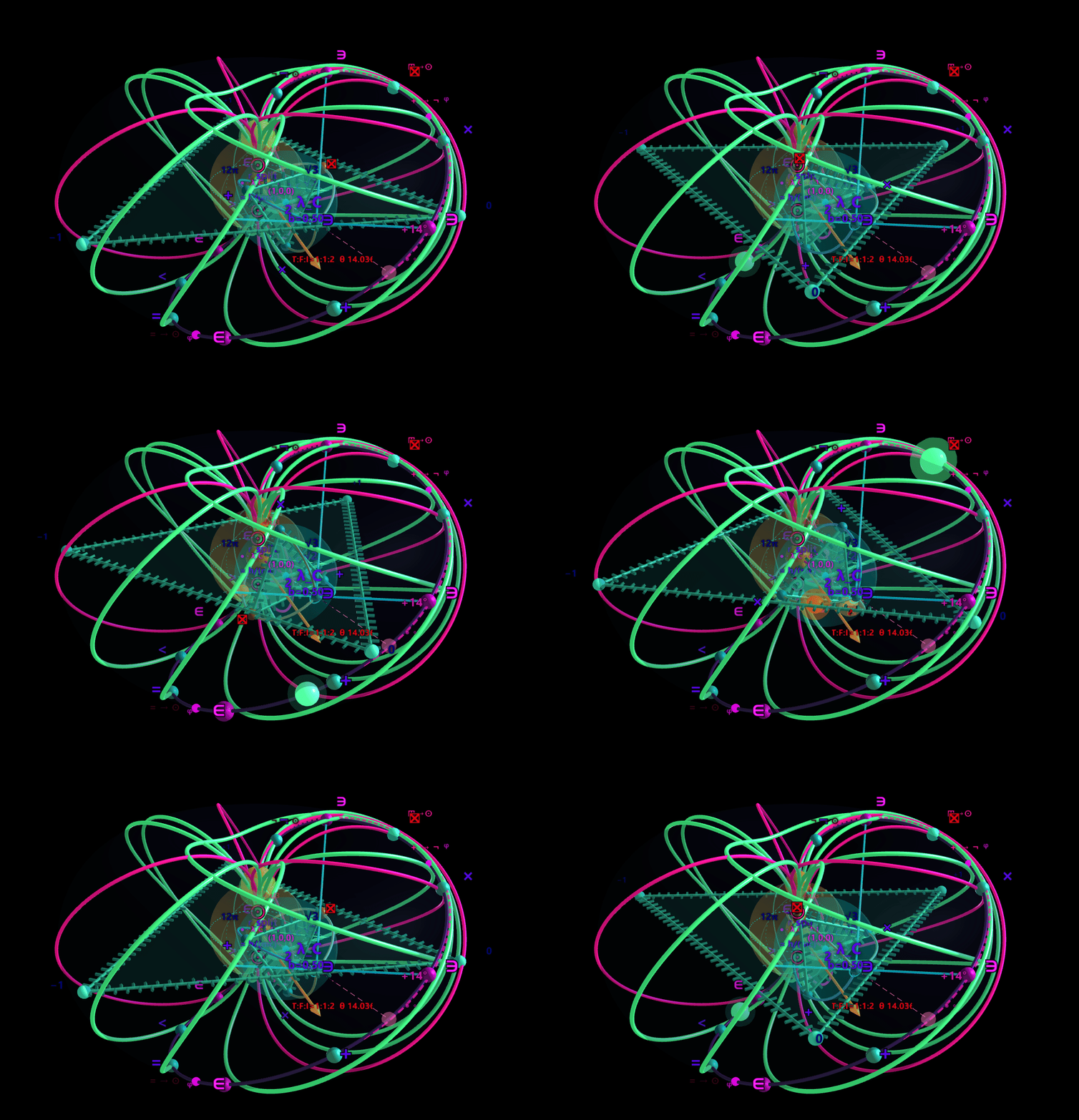
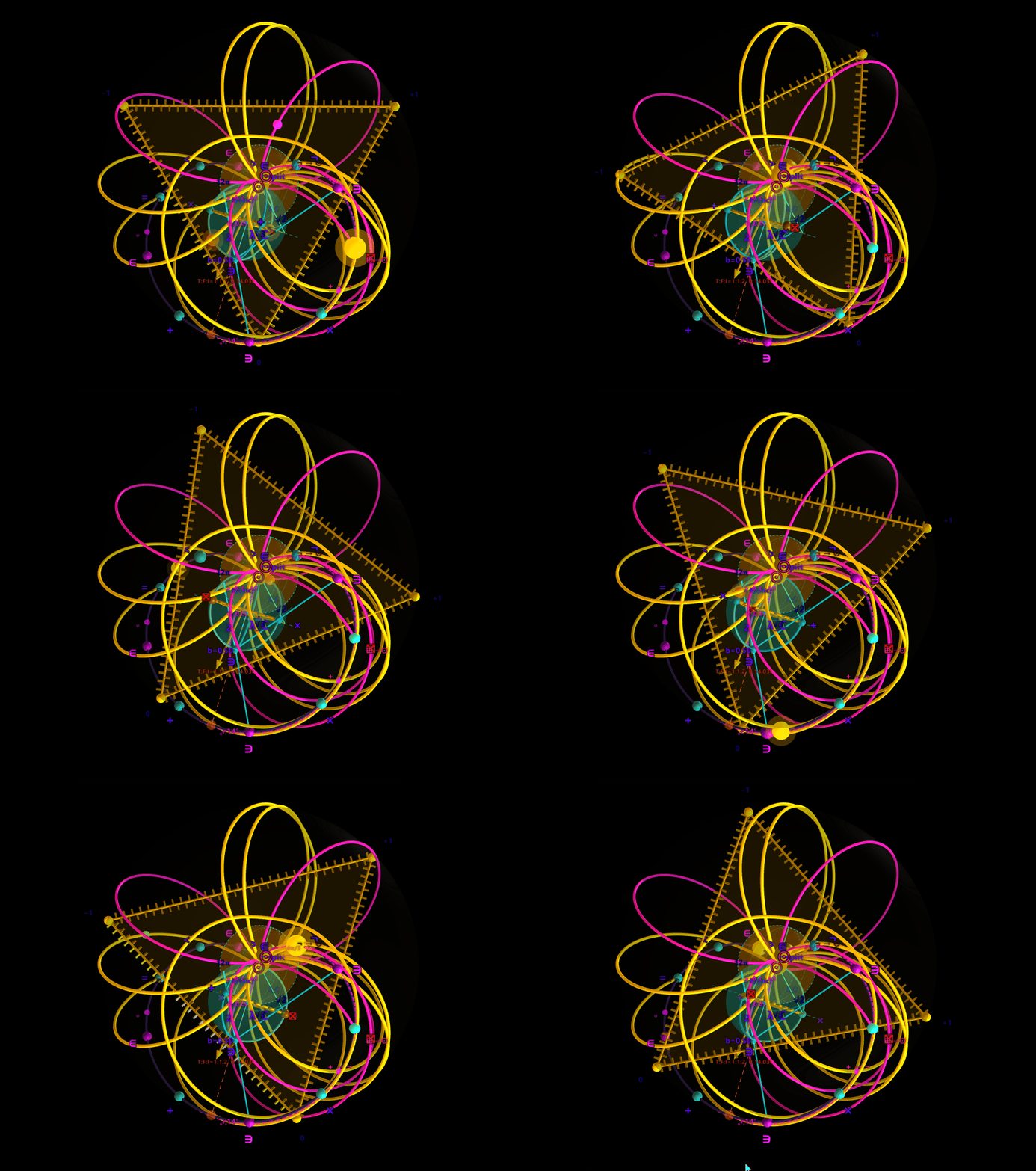
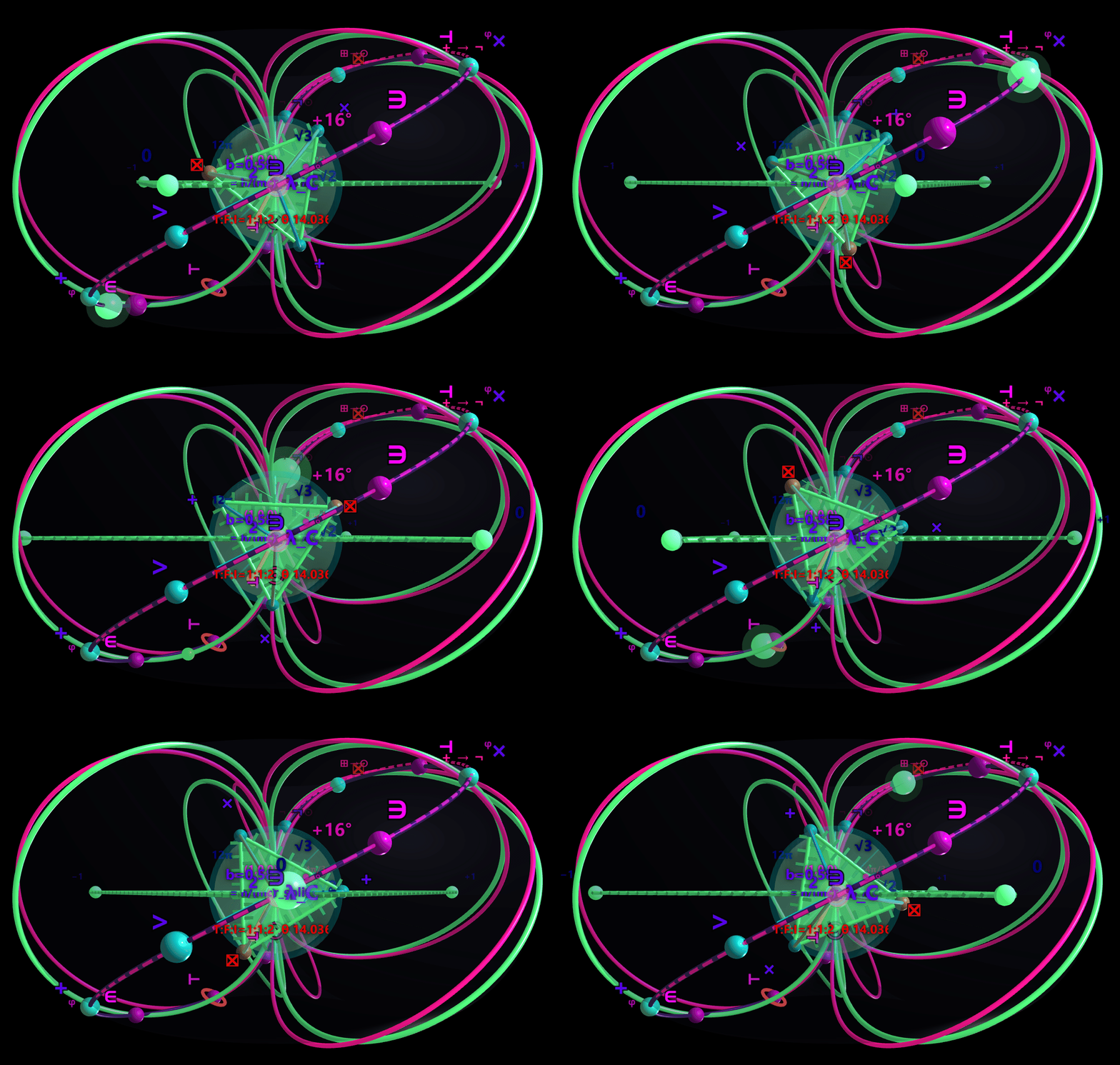
A ritual poem in eight cantos — the shamanic path to gnosis through the Norse tradition: hanging on Yggdrasil, the Well of Mímir, the three Norns, and the forging of the runes. Solve et coagula. The wound is the site of knowing. The rune is the grammar. The grammar flows in the wound.